
FAQs
Miramonte Valley View – Camden Community
Miramonte Valley View – Residence at Idaho
Lofts on the 93
The Commons at Mullan
the Midtown Missoula Master Plan by providing more housing choices, providing infill development, creating community spaces, encouraging local business, and enhancing connectivity
the Parks, Recreation, Open Space, & Trails Master Plan 2040 by providing a park within walking distance of housing and offering trail connectivity
the Our Missoula Land Use Plan 2045 by providing housing diversity and housing for middle incomes
Who is the developer?
Principal and CEO of Miramonte Companies Chris Kemmerly lives in Missoula and has expanded his development company to include construction in Montana. Past projects include the Amazon Last Mile Facilities in both Missoula and Billings, and the Missoula Lofts development at 3779 W Broadway. In addition to Midtown Commons, Miramonte Companies have the following current and upcoming projects:
How was the project developer chosen?
The Missoula Economic Partnership (MEP), under contract with the City’s Missoula Redevelopment Agency, put out a wide call for developers across the region. MEP staff had discussions with more than 30 interested teams, after which seven groups expressed serious interest. Each team received a detailed site brief that included community goals, planning history, project expectations and available development tools, all of which was informed by public feedback gathered during the Midtown Master Planning process.
Over a 2.5-month period, MEP reviewed each submission, met with prospective teams and evaluated their experience, financial capacity and ability to deliver on the community’s vision. From there, MEP provided the City with a short list of qualified developers and facilitated interviews to help ensure a thorough selection process.
How much will this cost city taxpayers?
No new tax dollars will be levied for this project.
The City of Missoula worked with the Missoula Economic Partnership to negotiate and purchase the land with TIF funding in December 2024 for $5.9 million. The City will sell the property to Miramonte Companies at full cost. Tax Increment Financing may be used to invest in public infrastructure such as roads, sidewalks, and utilities if requested and approved by the Missoula Redevelopment Agency Board.
Who gets to decide the design of the project?
Miramonte Companies have designed the housing development by aligning with the goals of the Midtown Master Plan. The developer will follow zoning and engineering standards. The initial concept includes market rate workforce housing and commercial development.
Any public infrastructure in the project will also adhere to common standards.
The public is invited to attend a park design workshop on November 19 to help design the public park that will be part of the development.
Will the park be public?
Yes, the park planned for Midtown Commons will be a public neighborhood park. A park design workshop will allow neighborhood residents to give input on the park’s design.
How does this project align with adopted city plans and goals?
Midtown Commons draws on recommendations from Mayor Andrea Davis’s Task Force on City Lands Redevelopment, which calls for strategies that provide a clear, actionable approach for leveraging City-owned properties to meet near- and long-term community goals and deliver lasting public benefit. It also meets the goals of
How can I be involved?
The public is encouraged to follow the progress of this development through the Engage Missoula web page.
The public also is invited to participate in a park design workshop on November 19, 2025, from 5:15 to 8:15 p.m. at Jefferson School, 1700 South Ave. W. A light meal will be served at 5:15 p.m. followed by the facilitated design workshop. Children ages 4 and older are welcome and will have supervised playtime, a meal, and their own park design activity.
Those unable to attend in person can participate online at Engage Missoula.
Why is the park at Midtown Commons only 1.3 acres when other recently constructed public parks are larger?
The developer (Miramonte Companies) will acquire the Midtown Commons property from the City at full cost. This private development will implement many aspects of the Midtown Missoula Master Plan, including an approximately 1.3-acre public park with important pedestrian and bicycle connections, along with housing and commercial development. The size of the new park, which is larger than what typically would be required of a private development like this, helps achieve the community’s goals without requiring additional public subsidy.
Why is the City not requiring permanently affordable housing at Midtown Commons?
Creating housing that is permanently income-qualified (frequently referred to as affordable housing) is much more complicated than simply requiring developers to do so. The City is committed to income-qualified housing where it is feasible, but it is not feasible everywhere. Income-qualified housing requires substantial public subsidy, and the tool typically used to provide that subsidy – Low Income Tax Credits – is not available in this location.
To make a meaningful dent in housing inventory, Missoula needs developers who are willing to build significant amounts of housing at a time. With Midtown Commons, the City is following guidance from Mayor Davis’ Task Force on City Lands Redevelopment and partnering with a developer who is prepared to move quickly to build a substantial amount of “missing middle” housing. “Missing middle” housing provides a range of housing types and choices along a spectrum of affordability for average wage earners.
The Midtown Missoula Master Plan recommends more housing choices and more opportunities for home ownership. Midtown Commons proposes a mix of housing types ranging from for-sale single-family homes, townhouses and condos to apartment rentals. Condos generally provide more affordable opportunities for ownership but are largely missing in the Missoula market.
Is Midtown Commons going to raise housing costs in the surrounding neighborhoods and displace vulnerable populations?
A significant factor contributing to high housing prices in the Missoula area is the lack of available housing units for sale and for rent, especially in the middle cost range.
Creating a range of housing options focused on the “missing middle,” as proposed at Midtown Commons, can help stabilize housing costs and mitigate displacement risks.
Why does this development include so much commercial space?
The Midtown Missoula Master Plan recommends development that fosters and maintains economic vitality. This is also a key priority for Mayor Davis. The Midtown Master Plan also recommends infill development with good street networks and pedestrian connectivity. Thriving commercial space with good connectivity is necessary to ensure that Missoulians have opportunities to work and do business in their own neighborhoods.
What will the commercial area entail? Why is it proposed right next to existing residential?
Commercial development includes a wide array of uses ranging from office space to small retail shops to coffee houses. The commercial space at Midtown Commons will be required to comply with the City’s regulatory code, which specifies uses and form to maintain neighborhood character.
The City and Miramonte have been discussing a potential opportunity to use a significant part of the commercial area for office space. A potential tenant has been identified, providing employment opportunities, although details still need to be worked out. If a suitable tenant is not identified for the potential office space, Miramonte may choose to build additional housing units instead.
What will happen to the trees that are currently on the site?
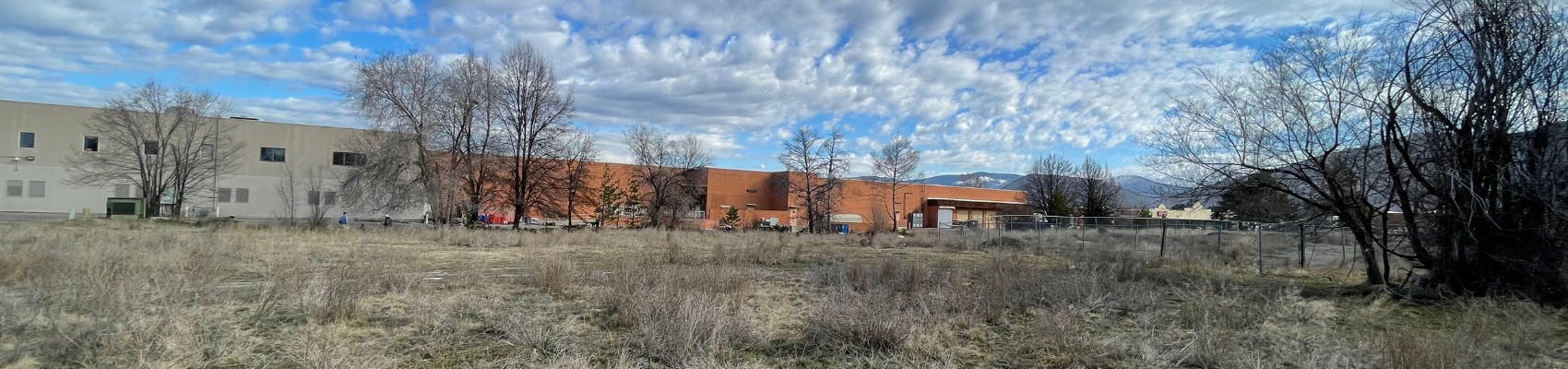
Arborists and landscape architects from the City’s Department of Parks and Recreation have assessed the species and health of trees on the Midtown Commons site. The dominant species are cottonwoods or Siberian elms, both of which are short-lived, weak-wooded species that present safety hazards in urban settings. The City is committed to fostering a safe, healthy, and diverse urban forest which includes street trees, greenways, trail connections, and natural areas. Appropriate species of trees will be planted in the new park and in boulevards along new streets and trail connections in Midtown Commons.
Why has the public engagement process for Midtown Commons been different from other recent City-owned land development projects?
Different City-owned parcels require different approaches. Midtown Commons reflects the strategic direction recommended by Mayor Davis’ Task Force on City Land Redevelopment. To address Missoula’s most pressing challenges, the Mayor has directed staff to make redevelopment decisions with a portfolio mindset, recognizing that not every goal can be met on every site, but meaningful progress can be made across the full suite of properties.
This work is guided by engagement with pragmatism. Public engagement and Council involvement remain essential but must be paired with clear communication about market realities, trade-offs, and feasibility.
It is no secret that some past efforts – such as the Old Library Block, Sleepy Inn, and Riverfront Triangle – were hindered by overly restrictive expectations and processes. Mayor Davis is taking a more disciplined, actionable approach. Midtown Commons is a clear example: the City of Missoula purchased the site and had an Exclusive Negotiation Agreement (ENA) in place within months – lightning speed compared to previous experiences.
Under Mayor Davis’ leadership, the City is balancing speed with stewardship, moving projects forward while staying grounded in community values. The City chose to partner with Miramonte Companies because they put forth a development concept that: provides more housing choices, including middle-income housing; provides infill development; creates community spaces; encourages local business, enhances community connectivity; and provides a new public park. These are goals of the Midtown Missoula Master Plan; the Parks, Open Space, and Trails Master Plan 2040; and the Our Missoula Land Use Plan 2045 – all of which were developed through significant public engagement.
What is the City’s process for selling the property to Miramonte?
The City and Miramonte have signed a legally binding Exclusive Negotiation Agreement (ENA) which provides a framework of intentions and actions for each party to undertake as a precursor to a development agreement and a buy-sell agreement.
The park design process and design for public infrastructure, such as streets and utilities, needs to be much more detailed before the actual development agreement and purchase and sale agreements can be finalized.
A development agreement is expected to be presented to City Council in Spring 2026. Any requests for TIF funding for public improvements will also be considered by the MRA Board, prior to being presented to City Council. A final City Council decision regarding the land sale agreement is not likely to occur until late Spring 2026, after the development agreement has been finalized. These City Council meetings and the MRA Board Meeting will have the opportunity for public comment.
Is the exclusive negotiating agreement between Miramonte and the City publicly available?
Yes. The City has a formal process that everyone seeking public records is required to follow, which can be found at this link: https://www.ci.missoula.mt.us/FormCenter/City-Clerk-2/Request-for-Public-Records-40
How will traffic be slowed down?
The City’s Department of Public Works and Mobility is establishing street classification, speed limits, road geometry, safe pedestrian crossing strategies, on-street parking strategies, etc. The developer will follow the City’s zoning and engineering standards.