Downtown Signal Optimization
Share Downtown Signal Optimization on Facebook
Share Downtown Signal Optimization on X (formerly Twitter)
Share Downtown Signal Optimization on Linkedin
Email Downtown Signal Optimization link
What are we doing?
- Signal Reconstruction & Retiming
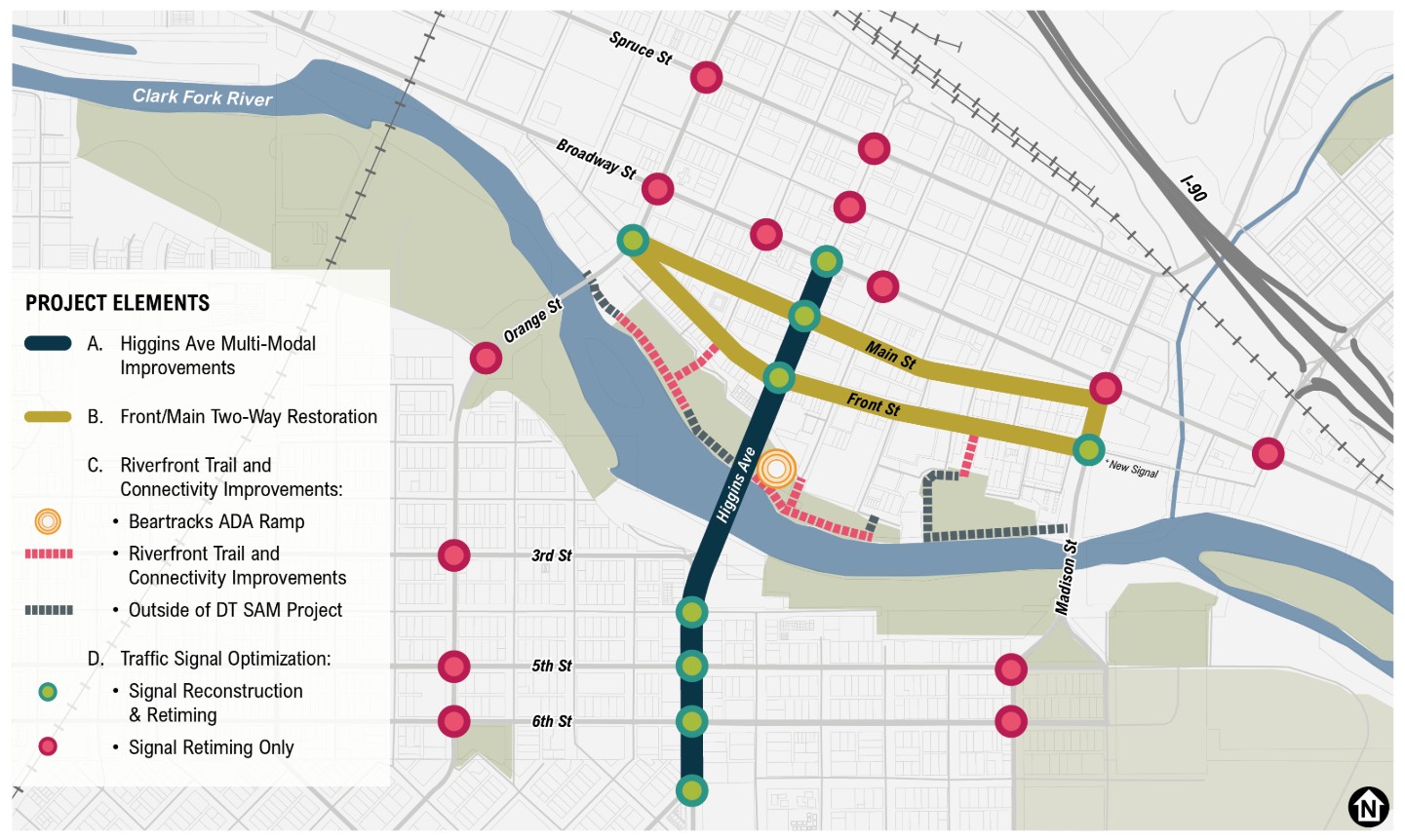
- Reconstructing the traffic signals and upgrading equipment directly on Higgins Ave, Front St, and Main St.
- These signals will align with the new lane configurations on Higgins Avenue and intersection layouts at Front/Main/Orange and Front/Madison (new signal)
- Retiming 23 traffic signals within the downtown traffic signal network. The retiming will occur after traffic is moving on the new street configurations of Higgins Ave, Front Street and Main Street.
When are we doing it?
Current stage: DESIGN
- currently at a 90% level of detail.
- expecting to reach 100% design in Summer 2026.
Next Stage: CONSTRUCTION
- Start of construction: TBD, potentially Spring 2027
- Signal retiming will be completed after traffic is moving on the new lane configurations of Higgins, Front St, and Main Street.
Why are we doing it?
- The Signal Optimization project element is important to ensure the downtown transportation network operates efficiently.
- By upgrading equipment at 9 intersections, we can review real-time traffic operations at key downtown intersections to ensure the optimum performance of the transportation network.
- Traffic signal upgrades are necessary as a result of the changes to Higgins Avenue and Front/Main Street two-way conversion.
How will this change/enhance Downtown Missoula?
SAFETY: Reducing the risk of crashes and increasing the level of comfort for all users traveling to and within downtown.
- The upgraded equipment will gather real-time traffic data to help continuously improve signal timing and operations. This will enhance safety by making intersections more predictable, easier for all users to navigate, and will reduce crash risk. Specifically, this can:
- Reduce red-light running and crashes
- Improve safety for people walking by providing better crossing times
- Create smoother traffic flow with fewer sudden stops
ACCESS: The ease with which people can reach desired goods, services, activities, and destinations using a variety of transportation modes
- Improves access for people walking and rolling by providing more appropriate crossing times for people of all abilities.
- Better signal coordination reduces delays and makes trips more consistent for drivers, transit, and other users.
- Signal timing can be refined to better accommodate vehicles, transit, cyclists, and pedestrians using the downtown corridors.
MOBILITY: The ease, efficiency, and capability of moving people between destinations.
- Improves traffic flow within downtown by moving people more efficiently.
- Enhances travel time reliability by creating more consistent signal coordination.
- Supports efficient movements for all users.
Click here to return to the full Downtown SAM project.
-
Downtown SAM Open House: April 28
Share Downtown SAM Open House: April 28 on Facebook Share Downtown SAM Open House: April 28 on X (formerly Twitter) Share Downtown SAM Open House: April 28 on Linkedin Email Downtown SAM Open House: April 28 link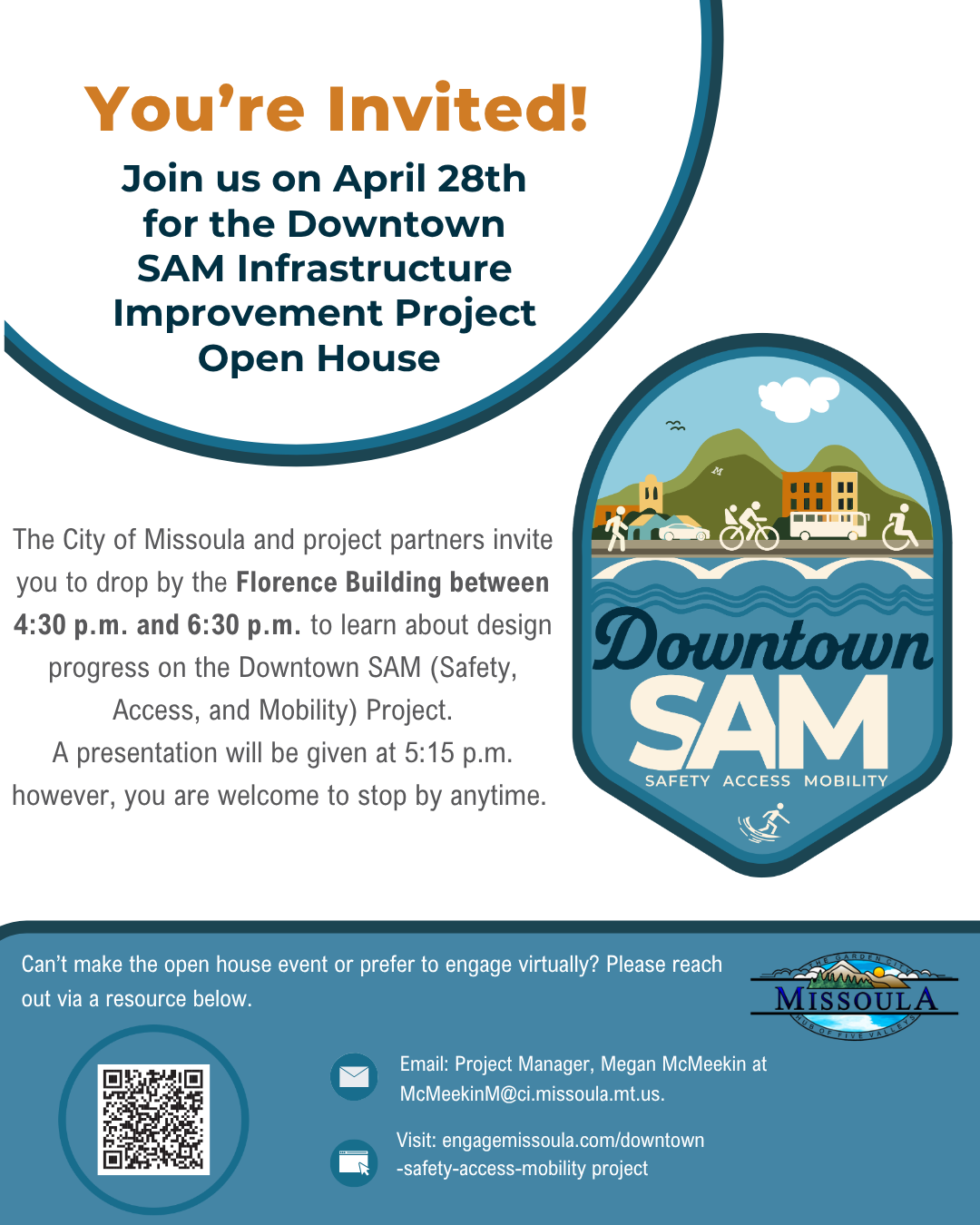
Join us on April 28 from 4:30 - 6:30 p.m. at the Florence Building to learn about design on the Downtown Safety, Access, and Mobility (SAM) project. A presentation will be given at 5:15 p.m. but you are welcome to stop by anytime.
-
Save the Date! First Downtown SAM Open House
Share Save the Date! First Downtown SAM Open House on Facebook Share Save the Date! First Downtown SAM Open House on X (formerly Twitter) Share Save the Date! First Downtown SAM Open House on Linkedin Email Save the Date! First Downtown SAM Open House link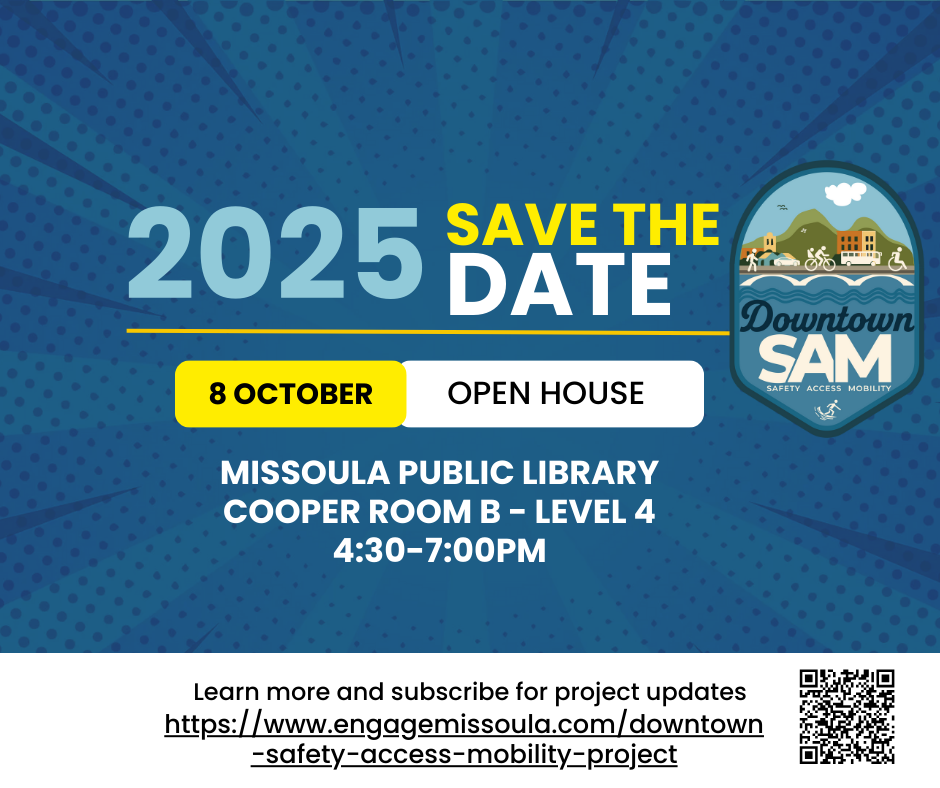
Save the date--October 8, 2025 will be the first Downtown SAM Open House.
- Drop in any time between 4:30-7:00pm.
- Missoula Public Library
- Cooper Room B - Level 4
Page last updated: 13 Jul 2026, 12:48 PM